Last night, the OGADE band performed at the Fitton Center for the Performing Arts in Hamilton, Ohio. In the darkened theater, about a dozen of us took our drums and flutes and rainstick and crammed into one dimly-lit corner of the stage area. The dundun player had to be careful not to whack the djembists on either side.
Despite the constricted space, the local troupe of belly dancers who call themselves the "Circle of Rhiannon" danced into the center and performed a series of group and solo dances that had everyone fascinated and wanting more.
Obviously the aesthetic and primal appeal of this performance is very strong. The insistent beating of the drums takes hold of the heart rhythms of the audience, and the swirling of colorful costumes and the liberated, sexy movements of the dancers draw the eyes of everyone. As a drummer in the back row, I could see that the entire audience was intent on the action on stage, and many were swaying to the beat.
It is good to have these occasions. Especially, it is good that audiences in the conservative world of Cincinnati have so many occasions to be exposed to live world music and dance.
When I drive around Hamilton with my moonroof open, I am assaulted by country music, country rock, christian(!) rock and hip-hop crap with indistinguishable lyrics played by cars that thump obnoxiously at intersections while waiting for lights that seem never to change. Though I close the moonroof, I cannot escape the monotonous, unimaginative thumping. It is enough to rattle the metal signs that say, "LOUD STEREO: Penalty $500".
Public exposure to live dancing and live music of other cultures helps to broaden the cultural awareness of the local citizenry. The current political climate, in which all things Arabic/Muslim are equated with terrorism demands to be countered by whatever means are available. Multicultural music and dance are powerful ambassadors for acceptance, appreciation, and understanding.
Showing posts with label music. Show all posts
Showing posts with label music. Show all posts
Wednesday, June 27, 2007


Sunday, April 22, 2007
The finesse fish I tasted
Did you ever enjoy grilled fish, fresh from the furnace?
I did.
When I was a teenager in Toronto, we had an Armenian next-door neighbour, Ed, who was a man of all talents, and a well-respected carpet merchant. His wife, Winnifred, was a classical pianist who gave lessons to a number of students, most of conservatory-level talent, on a baby grand piano which was large enough to fill the dining room of their 1.5 storey 1940's house. The piano stood on a very fine maroon persian rug, of course, leaving just enough room left for the student and her master to sit at the keyboard, metronome ticking. But Ed always saw to it that there were fresh flowers on the piano.
Everyone called Ed what sounded like "Hopar" to my ears, a term of endearment and respect meaning "uncle", I was told. He adored his wife and her music and her students. He would sit in the kitchen for hours over an espresso and absorb the many repetitions of Schumann and Brahms (and the Liszt goes on) whom most pianists would find difficult to perform, waiting for Chopin and Mozart. If neither of these was forthcoming within a reasonable time (two espressos), he would disappear to the basement, where he had built a darkroom.
In his country of birth, Ed had been a professional photographer. That is, he took the pictures (often using a view camera with its enormous plates) and processed them whether in color or B&W, the latter being his creative favourite.
When he came to Canada, he was mentored by a previous immigrant who was a rug seller, and in due course, opened his own shop south of the 401 highway on Avenue Road. None of these merchants were in competition with each other: they were a community and most were directly related, so they would lend a hand when one was needed.
Hopar and I became great friends: I spent many a summer leisure hour in conversation with him in the back yard. He planted a mulberry tree (later to be known as "that damned mulberry"... a term my father coined when out in his garden rooting up the weeds and the unstoppable progeny of the tree, even though it was on the far side of Ed's yard.)
One summer, Ed gave me a job at his store for two weeks while his regular help was on vacation. I typed invoices, confirmed installations with customers, kept payment records and when things were slow, tacked down expensive rugs on the floor of the shop and sprinkled dry cleaner and vacuumed them. New shipments would arrive, and we would wrestle them into the storage area. It was fascinating, tiring and he even paid me, although I would have worked for him for nothing.
Ed's accent rendered the "i" as a long "e" in English, and the reverse. So one day I found myself puzzled for a moment or two when I saw him spreading fertilizer on his extensive border garden. I asked what it was, and he said, "The very best ship sheet."
Nevertheless it was Ed's tending, care and advice that nursed a sparse wisteria vine on his side of our back porch from a pathetic trellis of six or seven vines to an impenetrable forest of violet cascades and dark green leafiness. And his roses and cucumbers were paragons of their species.
One summer day, Ed invited me to dinner, and said that we were going to have greelled feesh. I knew it would be good. We went inside, but rather than to the stove, we descended to the basement. Ed opened the furnace. Inside was a steel tray of coals, sitting on the big circular burner that was part of the typical coal-to-gas conversion. On it was a grill, and on that were three white fish, that from my cloistered experience of mainly breaded fish sticks, I failed to recognize.
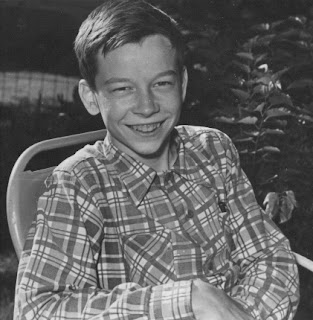
Hopar turned them over gently, closed the door, and went into the darkroom to show me his latest work. From the drying line he unclipped this picture. Five minutes later, we retrieved the perfectly grilled whatever-it-was, repaired to the kitchen, and with certain fresh additions from the garden, sat down in the guest bedroom, now converted to a dining area. Beethoven thundered from the music room. The metronome ticked relentlessly. But the furnace fish was finesse fish. I have not tasted its like since.
New owners inhabit our houses now. The music and the strong Armenian coffee are long gone. I have no idea what transpires in the neighbourhood these days, except that the price of those houses has increased more than tenfold. But I have no better wish for you than that you may enjoy neighbours on all your boundaries like Ed and Winnie.
(I wrote this with Canadian spellings in honour of my favourite neighbour who did me so many favours.)
I did.
When I was a teenager in Toronto, we had an Armenian next-door neighbour, Ed, who was a man of all talents, and a well-respected carpet merchant. His wife, Winnifred, was a classical pianist who gave lessons to a number of students, most of conservatory-level talent, on a baby grand piano which was large enough to fill the dining room of their 1.5 storey 1940's house. The piano stood on a very fine maroon persian rug, of course, leaving just enough room left for the student and her master to sit at the keyboard, metronome ticking. But Ed always saw to it that there were fresh flowers on the piano.
Everyone called Ed what sounded like "Hopar" to my ears, a term of endearment and respect meaning "uncle", I was told. He adored his wife and her music and her students. He would sit in the kitchen for hours over an espresso and absorb the many repetitions of Schumann and Brahms (and the Liszt goes on) whom most pianists would find difficult to perform, waiting for Chopin and Mozart. If neither of these was forthcoming within a reasonable time (two espressos), he would disappear to the basement, where he had built a darkroom.
In his country of birth, Ed had been a professional photographer. That is, he took the pictures (often using a view camera with its enormous plates) and processed them whether in color or B&W, the latter being his creative favourite.
When he came to Canada, he was mentored by a previous immigrant who was a rug seller, and in due course, opened his own shop south of the 401 highway on Avenue Road. None of these merchants were in competition with each other: they were a community and most were directly related, so they would lend a hand when one was needed.
Hopar and I became great friends: I spent many a summer leisure hour in conversation with him in the back yard. He planted a mulberry tree (later to be known as "that damned mulberry"... a term my father coined when out in his garden rooting up the weeds and the unstoppable progeny of the tree, even though it was on the far side of Ed's yard.)
One summer, Ed gave me a job at his store for two weeks while his regular help was on vacation. I typed invoices, confirmed installations with customers, kept payment records and when things were slow, tacked down expensive rugs on the floor of the shop and sprinkled dry cleaner and vacuumed them. New shipments would arrive, and we would wrestle them into the storage area. It was fascinating, tiring and he even paid me, although I would have worked for him for nothing.
Ed's accent rendered the "i" as a long "e" in English, and the reverse. So one day I found myself puzzled for a moment or two when I saw him spreading fertilizer on his extensive border garden. I asked what it was, and he said, "The very best ship sheet."
Nevertheless it was Ed's tending, care and advice that nursed a sparse wisteria vine on his side of our back porch from a pathetic trellis of six or seven vines to an impenetrable forest of violet cascades and dark green leafiness. And his roses and cucumbers were paragons of their species.
One summer day, Ed invited me to dinner, and said that we were going to have greelled feesh. I knew it would be good. We went inside, but rather than to the stove, we descended to the basement. Ed opened the furnace. Inside was a steel tray of coals, sitting on the big circular burner that was part of the typical coal-to-gas conversion. On it was a grill, and on that were three white fish, that from my cloistered experience of mainly breaded fish sticks, I failed to recognize.

Hopar turned them over gently, closed the door, and went into the darkroom to show me his latest work. From the drying line he unclipped this picture. Five minutes later, we retrieved the perfectly grilled whatever-it-was, repaired to the kitchen, and with certain fresh additions from the garden, sat down in the guest bedroom, now converted to a dining area. Beethoven thundered from the music room. The metronome ticked relentlessly. But the furnace fish was finesse fish. I have not tasted its like since.
New owners inhabit our houses now. The music and the strong Armenian coffee are long gone. I have no idea what transpires in the neighbourhood these days, except that the price of those houses has increased more than tenfold. But I have no better wish for you than that you may enjoy neighbours on all your boundaries like Ed and Winnie.
(I wrote this with Canadian spellings in honour of my favourite neighbour who did me so many favours.)
Saturday, February 24, 2007
A different typo music
This morning while wasting time at the computer I went to the Google Directory in search of internet humor. Unrestrained clicking led me to a folk music style I'd never heard of: filk music.
A little further surfing revealed that
The common thread that underlies filk, apparently, is science fiction or technology or cats and stuff like that and, frequently parody. One really great example is a song entitled "The Star Trek Next Generation Episode Guide" by filk artist Blake Hodgetts.
It's not all parody: there are all different styles and different performers, and a number of festivals across the US and in the UK. How come I never found out about this until now? I guess I just never made that particular typo.
A little further surfing revealed that
in the early 1950s, the term filk music started as a misspelling of folk music in an essay by Lee Jacobs, "The Influence of Science Fiction on Modern American Filk Music." - Wikipedia
The common thread that underlies filk, apparently, is science fiction or technology or cats and stuff like that and, frequently parody. One really great example is a song entitled "The Star Trek Next Generation Episode Guide" by filk artist Blake Hodgetts.
It's not all parody: there are all different styles and different performers, and a number of festivals across the US and in the UK. How come I never found out about this until now? I guess I just never made that particular typo.
Saturday, February 3, 2007
The day the music died
One of the gifts my parents gave me, over my dead body at times, was music lessons. I learned to play the piano over a period of several years, under two piano teachers.
The first was a taskmaster: a well-known boys and men's choir director at a church in Toronto. He was born of English parents in India, and had the classic British public school education. (Note to Americans: "public" meant private school in British English). It showed.
Since the major component of any British education is discipline, Mr. L. invoked fear and shame as the two major learning motivators. On someone who was in his late childhood, this approach had a profound effect that has lingered for years. My failure to practice diligently was detected at almost every lesson. No excuse served.
I believe it was this approach that caused me to perform miserably at his annual concert in the church hall, in front of parents and peers. I took my place on the stage at the piano, and after fiddling with the knobs on the piano seat, and placing my trembling hands on the keys, commenced Beethoven's "Für Elise", a tender love ballad.
I suddenly realized that I had no idea what key I was playing in. I soldiered on, and got off the stage as quickly as possible, vowing never EVER to play in one of those concerts again. I am certain Beethoven never heard his opus rendered as quickly in a transposed key in his lifetime.
Shortly thereafter, my parents persuaded me to resume lessons from a local woman whose manner was much more compassionate. Still, the damage was done. I suddenly lost my ability to sight read (i.e. play while reading notation from music that was totally new to me). I became terrified of keys with more than one sharp or flat. And thus did my formal musical education end just prior to the Grade 7 Piano level examinations.
Nevertheless, none of this deeply horrific psychological scarring dimmed my love for classical music. During my rebellious years (the teens through the late twenties, I believe they were), I wavered between long periods of listening to country music and jazz and rock 'n' roll, but I would always come back to Bach and the baroque.
High school found me at (what else) a boy's private school, which had a compulsory cadet corps. As I was terrified of guns and had never known war, I hated this whole experience, especially the prickly woolen uniform. I turned to music as a way of reducing the angst. I played clarinet and later, bass clarinet, in the cadet corps band.
I seem to recall that I was wearing orthodontic appliances with hooks and rubber bands during this period, a factor that deterred me from attempting my real interest, the trumpet. At least the clarinet did not lacerate the lips, although the upper band did tend to restrict the circulation in the upper lip while attempting to create a good seal over the mouthpiece. Still, in the best traditions of British education, I stiffened the upper lip and learned to love the "licorice stick".
I did, of course, have my moments of shame in the band. One night as we were marching down the hall toward the auditorium, I was carrying the bass clarinet. I would be the featured soloist in Ferde Grofe's Grand Canyon Suite, in particular the bit where the burro trundles the tourist down the narrow trail. What I didn't notice was that the pad had fallen out of the key cover at the low end of the clarinet. So that night, the burro trotted confidently "On the Trail", but as he neared the base of the cliff, he bellowed a very convincing "Hee Haw!!", and was rewarded by a flushed face on not only his rider, but also on that of the conductor of the tour.
I was, I surmised, meant not to perform, but rather to appreciate the artistry of those who do. And so, tonight, I'm tuned in to "Otto's Baroque" on 1.FM.
Join me, won't you?
The first was a taskmaster: a well-known boys and men's choir director at a church in Toronto. He was born of English parents in India, and had the classic British public school education. (Note to Americans: "public" meant private school in British English). It showed.
Since the major component of any British education is discipline, Mr. L. invoked fear and shame as the two major learning motivators. On someone who was in his late childhood, this approach had a profound effect that has lingered for years. My failure to practice diligently was detected at almost every lesson. No excuse served.
I believe it was this approach that caused me to perform miserably at his annual concert in the church hall, in front of parents and peers. I took my place on the stage at the piano, and after fiddling with the knobs on the piano seat, and placing my trembling hands on the keys, commenced Beethoven's "Für Elise", a tender love ballad.
I suddenly realized that I had no idea what key I was playing in. I soldiered on, and got off the stage as quickly as possible, vowing never EVER to play in one of those concerts again. I am certain Beethoven never heard his opus rendered as quickly in a transposed key in his lifetime.
Shortly thereafter, my parents persuaded me to resume lessons from a local woman whose manner was much more compassionate. Still, the damage was done. I suddenly lost my ability to sight read (i.e. play while reading notation from music that was totally new to me). I became terrified of keys with more than one sharp or flat. And thus did my formal musical education end just prior to the Grade 7 Piano level examinations.
Nevertheless, none of this deeply horrific psychological scarring dimmed my love for classical music. During my rebellious years (the teens through the late twenties, I believe they were), I wavered between long periods of listening to country music and jazz and rock 'n' roll, but I would always come back to Bach and the baroque.
High school found me at (what else) a boy's private school, which had a compulsory cadet corps. As I was terrified of guns and had never known war, I hated this whole experience, especially the prickly woolen uniform. I turned to music as a way of reducing the angst. I played clarinet and later, bass clarinet, in the cadet corps band.
I seem to recall that I was wearing orthodontic appliances with hooks and rubber bands during this period, a factor that deterred me from attempting my real interest, the trumpet. At least the clarinet did not lacerate the lips, although the upper band did tend to restrict the circulation in the upper lip while attempting to create a good seal over the mouthpiece. Still, in the best traditions of British education, I stiffened the upper lip and learned to love the "licorice stick".
I did, of course, have my moments of shame in the band. One night as we were marching down the hall toward the auditorium, I was carrying the bass clarinet. I would be the featured soloist in Ferde Grofe's Grand Canyon Suite, in particular the bit where the burro trundles the tourist down the narrow trail. What I didn't notice was that the pad had fallen out of the key cover at the low end of the clarinet. So that night, the burro trotted confidently "On the Trail", but as he neared the base of the cliff, he bellowed a very convincing "Hee Haw!!", and was rewarded by a flushed face on not only his rider, but also on that of the conductor of the tour.
I was, I surmised, meant not to perform, but rather to appreciate the artistry of those who do. And so, tonight, I'm tuned in to "Otto's Baroque" on 1.FM.
Join me, won't you?
Saturday, January 27, 2007
We need more music and less noise.
The current evolution of the World Wide Web, popularly known as Web 2.0, is all about collaboration. There are new ways of using the new technology that weren't possible before the development of new programs such as Ajax and Active-X.
The days when authoring internet content was limited to those who knew how to write HTML code are behind us. The first stage was the development of forms: scripts that allowed a web page to actually collect responses to surveys and guestbooks and the like. The next major breakthrough was the invention of the weblog, which obviated the need to be an HTML expert in order to express yourself. And then, we had the collaborative weblog, where groups can post entries, not just comments in response to one person's blog.
Email groups have a long history. But then email is still the next biggest use of the web, right up there after spam. And there came the Open Source movement, through which amazingly useful and complex programs are written by people who do it for the love of it, and for the challenge of fixing problems in each other's code. This resulted, for example, in OpenOffice, a free Microsoft-compatible office suite, and several others of the type.
Under Web 2.0, though, office programs are migrating to the web. Microsoft may be planning to lease its next release, but the competition is free, and so is the storage space.
We hardly need to mention Google, do we? But you can look at Google Labs for insights into what is coming under Web 2.0. And let's not forget internet telephony and free calls to any internet-connected person in the world, and online video webcams.
Web 2.0 is most notable for social networking, with all its joys and perils. The internet dating services that charge for their meet market activities are not in danger yet, but through services like YouTube and the many photo sites, it is a simple matter to identify things to do, places to go and people to see. Meetups are common: people get to know each other before they attend one. The blind date is eliminated by the webcam.
Not too many years back was Napster where music was a steal. Then came MP3.com, a place where you could find any kind of music you love, for free, but also a place that got sued out of existence because of a copyright slipup. It's back, but there's not much there for The Old Guy's taste.
MySpace started out as a place for independent bands to store and serve their music, although now it has become something of a voyeur's paradise, but still, it attracts musicians and filmmakers and audiences of many kinds. Many artists get recording contracts as a result of this exposure.
Soundclick and Live365 and Last.FM and Freeplay and Shoutcast are just a few of the new sites that provide music. Pandora is unique in the way they try to discern what kind of music you like from the kind you play, thereby introducing you to new stuff that won't jar you, but that you might like to investigate (and potentially, of course, buy).
Gnod is a site that doesn't actually play what you suggest, but uses an interactive graphic approach to mapping the universe of music that begins when you enter one title you like. It plays music for your when you become part of its social network, by signing up.
Thus the web has become a place where you can expand your particular universe to include things that expand your universe.
We need more music. We need more harmony. And who but we ourselves can be the musicians? With Web 2.0 we are also the producers, distributors and customers. But that's not a new thing. It's just a different way of being present.
Yehudi Menuhin said that the purpose of music is essentially to entune us to the vibrations of the universe. Deep in us there must be an Essential Tuning Fork: the perfect pitch that keeps us centered and able to recognize that harmony in others. We speak of "overtones" as a negative, as in "there were overtones of mistrust in his remarks", but it is the overtones that create the unique timbre of a sound. You can distinguish a harp from a flute by their overtones, subtle vibrations that are created even as the universe is moved by our own moving.
The days when authoring internet content was limited to those who knew how to write HTML code are behind us. The first stage was the development of forms: scripts that allowed a web page to actually collect responses to surveys and guestbooks and the like. The next major breakthrough was the invention of the weblog, which obviated the need to be an HTML expert in order to express yourself. And then, we had the collaborative weblog, where groups can post entries, not just comments in response to one person's blog.
Email groups have a long history. But then email is still the next biggest use of the web, right up there after spam. And there came the Open Source movement, through which amazingly useful and complex programs are written by people who do it for the love of it, and for the challenge of fixing problems in each other's code. This resulted, for example, in OpenOffice, a free Microsoft-compatible office suite, and several others of the type.
Under Web 2.0, though, office programs are migrating to the web. Microsoft may be planning to lease its next release, but the competition is free, and so is the storage space.
We hardly need to mention Google, do we? But you can look at Google Labs for insights into what is coming under Web 2.0. And let's not forget internet telephony and free calls to any internet-connected person in the world, and online video webcams.
Web 2.0 is most notable for social networking, with all its joys and perils. The internet dating services that charge for their meet market activities are not in danger yet, but through services like YouTube and the many photo sites, it is a simple matter to identify things to do, places to go and people to see. Meetups are common: people get to know each other before they attend one. The blind date is eliminated by the webcam.
Not too many years back was Napster where music was a steal. Then came MP3.com, a place where you could find any kind of music you love, for free, but also a place that got sued out of existence because of a copyright slipup. It's back, but there's not much there for The Old Guy's taste.
MySpace started out as a place for independent bands to store and serve their music, although now it has become something of a voyeur's paradise, but still, it attracts musicians and filmmakers and audiences of many kinds. Many artists get recording contracts as a result of this exposure.
Soundclick and Live365 and Last.FM and Freeplay and Shoutcast are just a few of the new sites that provide music. Pandora is unique in the way they try to discern what kind of music you like from the kind you play, thereby introducing you to new stuff that won't jar you, but that you might like to investigate (and potentially, of course, buy).
Gnod is a site that doesn't actually play what you suggest, but uses an interactive graphic approach to mapping the universe of music that begins when you enter one title you like. It plays music for your when you become part of its social network, by signing up.
Thus the web has become a place where you can expand your particular universe to include things that expand your universe.
We need more music. We need more harmony. And who but we ourselves can be the musicians? With Web 2.0 we are also the producers, distributors and customers. But that's not a new thing. It's just a different way of being present.
Yehudi Menuhin said that the purpose of music is essentially to entune us to the vibrations of the universe. Deep in us there must be an Essential Tuning Fork: the perfect pitch that keeps us centered and able to recognize that harmony in others. We speak of "overtones" as a negative, as in "there were overtones of mistrust in his remarks", but it is the overtones that create the unique timbre of a sound. You can distinguish a harp from a flute by their overtones, subtle vibrations that are created even as the universe is moved by our own moving.
Saturday, January 13, 2007
Of Change and Changers
My father used to marvel at the speed at which things were changing in his era.
We'd be sitting in the rocking chair, I perhaps 9 years old or less, on his lap in the evening darkness in the living room. I would drape myself over him so that I could be hypnotized by the small red "pilot light" on the bottom of the high-fidelity console that our family had had for a number of years. In the changer was about ten pounds of Tchaikovsky's ballet, Swan Lake, in the form of half a dozen 12-inch diameter, 78 rpm records.
He would release the changer, and with a "whamp" the first disk would land on the turntable, and the arm would jerk feverishly to the left and then lower with reasonable precision on the lead-in grooves. The speaker would respond with a thump and a click, and some noises that I later learned were dust particles. Soon, an orchestra guided by Sir Thomas Beecham or some other notable would begin the overture, and I would settle back as the rocking began, my eyes rooted on the red button light which created pinkish fading streaks on my retina as the chair moved.
My dad had long ago learned that when you sat in a rocker, it moved too fast, and took too much effort. So he locked one leg in an outstretched position for as much as ten to fifteen minutes at a time, which changed the geometry and the physics of the entire movement to something more gentle and amenable to the ballet. Then he would change legs.
It must have taken considerable engineering and musical skills to shoehorn those great orchestral works into the limitations of a 78 rpm album. Some of our albums had one record, the last, on which the second side had only a single, abrupt groove in a sea of polished plastic. Its purpose was to lead the stylus to the end so that it would lift and shut off without going astray, since the musical opus ended on the other side. I do remember one record where the orchestra warped to hyperspeed in order to complete the work before the needle kicked off.
As he sat there listening to the music and the changer, Dad would inevitably comment, "My oh my. If my Dad were here he would be astounded at the sound of this hi-fi." And later, when hi-fi became stereo and albums changed from 78 rpm to 33 1/3 with entire works on one side, he would comment on "If only Dad were here to hear this symphony." Of course, when a record warped so that the next one slipped on the surface below it and the music didn't get up to the proper speed, it was not thrown out, but relegated to a heavy green footstool box that could only be moved by a forklift.
At one point, as a surprise gift for Mother, Dad recorded his own tenor rendition of a song whose title is lost to me now but might have been "My Blue Heaven", on a ten-inch 78 with a piano accompaniment. I believe this performance may have taken place at the school where he taught, but wherever, we were enthralled. He belonged to a men teachers' choir for many years on the strength of his musicality and his attendance record.
So now I find myself looking at the iPods and the MP3 players and the online music sites, and thinking, "Man. If Dad were here today, he'd be blown away by the sound of this computer system."
And some day my sons will sit in their rockers and shout, "Too bad The Old Guy never had one of these nifty Dolby 5.1 micro-implants. They rock!"
So what has really changed? Technology? Certainly. Rocking chairs? Mainly in price. Music? For sure. But what I can't figure out is how my dad locked his knee for so long without feeling fatigue. Believe me, I've tried, and found it difficult to walk afterwards. He did it into his 80s without ever revealing the secret.
Dad, you lock!
We'd be sitting in the rocking chair, I perhaps 9 years old or less, on his lap in the evening darkness in the living room. I would drape myself over him so that I could be hypnotized by the small red "pilot light" on the bottom of the high-fidelity console that our family had had for a number of years. In the changer was about ten pounds of Tchaikovsky's ballet, Swan Lake, in the form of half a dozen 12-inch diameter, 78 rpm records.
He would release the changer, and with a "whamp" the first disk would land on the turntable, and the arm would jerk feverishly to the left and then lower with reasonable precision on the lead-in grooves. The speaker would respond with a thump and a click, and some noises that I later learned were dust particles. Soon, an orchestra guided by Sir Thomas Beecham or some other notable would begin the overture, and I would settle back as the rocking began, my eyes rooted on the red button light which created pinkish fading streaks on my retina as the chair moved.
My dad had long ago learned that when you sat in a rocker, it moved too fast, and took too much effort. So he locked one leg in an outstretched position for as much as ten to fifteen minutes at a time, which changed the geometry and the physics of the entire movement to something more gentle and amenable to the ballet. Then he would change legs.
It must have taken considerable engineering and musical skills to shoehorn those great orchestral works into the limitations of a 78 rpm album. Some of our albums had one record, the last, on which the second side had only a single, abrupt groove in a sea of polished plastic. Its purpose was to lead the stylus to the end so that it would lift and shut off without going astray, since the musical opus ended on the other side. I do remember one record where the orchestra warped to hyperspeed in order to complete the work before the needle kicked off.
As he sat there listening to the music and the changer, Dad would inevitably comment, "My oh my. If my Dad were here he would be astounded at the sound of this hi-fi." And later, when hi-fi became stereo and albums changed from 78 rpm to 33 1/3 with entire works on one side, he would comment on "If only Dad were here to hear this symphony." Of course, when a record warped so that the next one slipped on the surface below it and the music didn't get up to the proper speed, it was not thrown out, but relegated to a heavy green footstool box that could only be moved by a forklift.
At one point, as a surprise gift for Mother, Dad recorded his own tenor rendition of a song whose title is lost to me now but might have been "My Blue Heaven", on a ten-inch 78 with a piano accompaniment. I believe this performance may have taken place at the school where he taught, but wherever, we were enthralled. He belonged to a men teachers' choir for many years on the strength of his musicality and his attendance record.
So now I find myself looking at the iPods and the MP3 players and the online music sites, and thinking, "Man. If Dad were here today, he'd be blown away by the sound of this computer system."
And some day my sons will sit in their rockers and shout, "Too bad The Old Guy never had one of these nifty Dolby 5.1 micro-implants. They rock!"
So what has really changed? Technology? Certainly. Rocking chairs? Mainly in price. Music? For sure. But what I can't figure out is how my dad locked his knee for so long without feeling fatigue. Believe me, I've tried, and found it difficult to walk afterwards. He did it into his 80s without ever revealing the secret.
Dad, you lock!
Subscribe to:
Posts (Atom)